



Are you searching for promising stocks in 2025? Discover the volatile stocks in the high-tech sector, the best picks for buying, and strategies for short-term investments. Find the ideal investments for your portfolio!

This article dives into the topic of volatile stocks. The year 2025 is a time for quick decision-making. Financial markets, pressured by the rapid pace of news, swift technological breakthroughs, and global challenges, have ceased to be an environment for “slow capital.” Those who can think quickly, adapt instantly, and aren’t afraid of short-term fluctuations gain an advantage. In this fast-paced rhythm, the ability to effectively leverage market impulses comes to the forefront.
The economic situation is unstable, but this is the essence of a new era. Central banks are torn between controlling inflation and stimulating growth, geopolitical events instantly reflect on asset prices, and artificial intelligence is being integrated into everyday processes. In such an environment, resilience is not about stability; it’s about the ability to pivot quickly.
Against this backdrop, the tech sector maintains its status as a magnet. Why? Because it continues to shape the future. Brains, not resources, are the main asset of this new age. Products created by developers, architects of computational power, AI creators, and semiconductor manufacturers do not just support the market; they drive it forward.
Players in this sector generate news daily. A new chip model, a breakthrough in generative AI, a merger, or the launch of a platform — each of these news events acts as a catalyst for market movements. While other sectors might yield 2-3 triggers a year, here there are 2-3 in a week. This means opportunities arise regularly.
The tech market features high dynamics: sharp rises, rapid declines, and unpredictable gaps. All of this is not an anomaly but rather the normal state of affairs. Price behavior becomes not only a reflection of fundamental indicators but also a reaction to crowd sentiments, algorithms, and social media. Those who can read such signals enter positions ahead of others and spot the best stocks for buying.
Additionally, tech-sector assets often behave like living organisms. They are sensitive to technological announcements, opinions of thought leaders, and even comments on Reddit. One successful release can send a company’s market cap soaring, while one bug can lead to a complete collapse. This sensitivity can be frightening for those seeking predictability, but it also offers significant profit potential.
In this context, volatility is not an enemy; it is energy. It disrupts passivity while fueling movement. This is not random noise but a pattern within chaos. For those who know how to work with it, volatility is a tool. It allows for entry during movements, exit on impulse, and enhanced outcomes. Most importantly, it provides freedom.
In a world where stability no longer guarantees growth, relying on predictability often leads to losses. The future belongs to those who are willing to be flexible, learn quickly, and are not afraid of sharp turns. Working with rapidly changing assets is not about speculation; it’s about precise calculations, discipline, and in-depth analysis.
Current realities demand a new mindset. You cannot simply wait; you must hunt. The tech sector today is not just a playground for speculation. It is a realm where future giants are born, illusions crumble, and entire industries transform. There is no room for random decisions here, but there is ample space for strategy.
Every movement presents an opportunity. Every pullback is an entry point. Every wave is a chance to gain momentum. If you can look at numbers as signals and charts as a language of the future, identifying promising stocks for 2025, you are already in the game. Welcome to a world where chaos is a tool, and speed is a new mindset.
Understanding volatility
Volatility is the amplitude of price fluctuations. The more dynamically an asset's price changes over short periods, the higher its volatility. If the price oscillates within ±1% per day, we are looking at a stable instrument. If swings reach ±5% or more, we are dealing with the kind of resource that can yield quick profits.
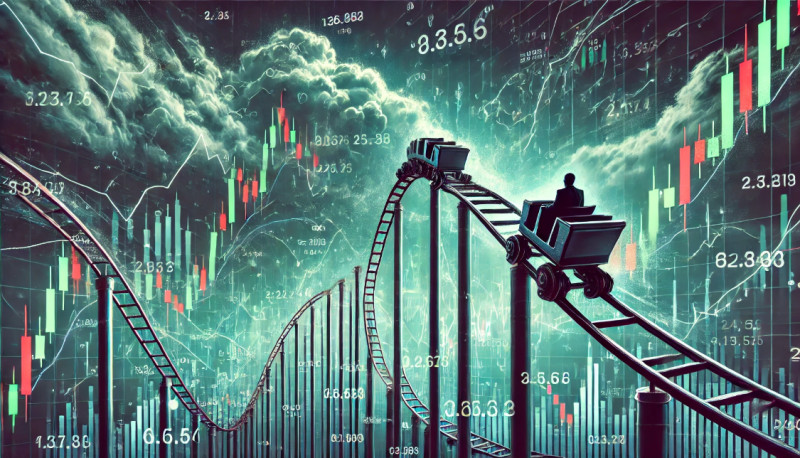
This is not random noise nor chaotic behavior. Volatility is a measurable characteristic. It reflects the level of uncertainty, interest in the asset, as well as its sensitivity to news, macroeconomic data, and crowd behavior. It is not a “scary” indicator; it is simply a measure of energy that can be both destructive and profitable — all depending on preparation.
How to measure volatility: simple and accurate tools
Standard deviation
One of the fundamental statistical tools. The greater the price dispersion around the mean over a period, the higher the volatility. It can be applied to both daily and intraday timeframes.
ATR (Average True Range)
This metric indicates how much the price changes on average during a single candle (typically over a 14-day period). A high ATR signals strong price movements. It works well on both hourly and daily charts and is especially useful for setting stop-loss orders.
Beta (β coefficient)
A comparative measure that shows how quickly and significantly an asset responds to overall market movements. If β = 1, the asset moves in line with the index (e.g., the S&P 500). If β > 1, the fluctuations are greater; if β < 1, they are smaller. Values of 1.3 and above indicate aggressive behavior.
Implied volatility (IV)
This reflects the expected volatility, most commonly used in derivatives. It shows market sentiment regarding how actively an asset's price will move in the future. Rising IV often signals the approach of a significant event, such as a report, merger, or product release.
Why high volatility and short-term investments capture attention of active participants
High volatility creates momentum. Low-volatility assets tend to move slowly, offering limited potential for speculative strategies. High-volatility assets provide movements that can be utilized within a day, a week, or even an hour. Strong impulses allow for precise entry and quick exits. These instruments can be leveraged in strategies like "quick level breakouts," "bounces from overbought areas," or "reactions to news." Where slow-moving stocks might increase by 0.3% in a day, volatile assets can surge 5-10% in an hour.
This is particularly important in a landscape where information spreads in seconds. One tweet, press release, or rumor can set off market movement. Navigating such fluctuations requires not intuition but a systematic approach.
Distinctions between dynamic stocks and "blue chips"
Classic stable stocks are typically large-cap companies with mature businesses that exhibit low sensitivity to news. Examples include Microsoft, Apple, Johnson & Johnson, and Procter & Gamble. Their behavior is predictable, volatility is low, and their β coefficient hovers around 0.8–1.1.
Dynamic instruments are their opposite. These are often young companies, rapidly growing and sometimes unprofitable, with aggressive business models. Their stocks are significantly influenced by insider news, rumors, and technological announcements. Their prices are imbued with expectations and emotions, providing the fuel for significant movements.
Stable stocks generate wealth. Volatile instruments enable quick turnover. They are not meant for accumulation; they are for capitalizing on movement.
The key is that volatility, like volatile stocks, equals control over timing. It does not determine whether an instrument is good or bad; it illustrates how quickly you can realize your ideas. Where low-volatility assets may take weeks to respond, here, a single day suffices. This resource only works with discipline. Without it, it becomes a risk; with it, it becomes a strength.
Working with such instruments means being prepared for high concentration, clear entry and exit rules, and regular analysis. That's where the advantage emerges — being a step ahead.
Volatility is not the enemy; it’s speed. And in 2025, speed is currency. The ability to see momentum, enter on that momentum, and exit at extremes is not magic; it’s a method. This method is accessible to those ready to act.
Analysis of high-tech sector
AI is becoming the nervous system of the global economy. Generative models are rewriting the rules of business, education, media, and automation. Companies are deploying proprietary language models, building private data centers powered by H100 and GH200 chips, and constructing LLM-oriented ecosystems. These are no longer experiments—they are the foundation of business operations. The fastest growth is seen in the corporate sector, cybersecurity, document automation, and robotics.

Tech stock market outlook
Quantum computing is moving from the theoretical stage to practical applications. Leading players—Google, IBM, Rigetti—are reporting advantages over classical systems in specific tasks. Financial modeling, cryptography, logistics optimization, and next-generation materials are becoming the first real-world use cases.
Even governments are now developing national quantum strategies. This is no longer a niche—it’s the foundation of new computational architectures.
Metaverses reimagined
The metaverse has taken shape not through VR, but through corporate simulations, digital twins, and AR in industry and education. The B2B format has given this trend a second wind. Platforms like NVIDIA Omniverse and Apple Vision Pro are moving toward practical use in engineering, manufacturing, and marketing. The tech sector now offers some of the best stocks to buy.
The focus has shifted from a “second life” to a “second space for business.”
Biotech converges with AI
Drug discovery is accelerating thanks to algorithms for protein structure prediction, virtual compound testing, and modeling of genetic interactions. Key areas include gene therapy, neurotechnology, and personalized medicine. Mergers between biopharma and IT companies are becoming standard—technology and science are now inseparable.
EVs and clean tech lead the charge
Electric vehicles and clean technologies remain at the forefront. Competition among Tesla, BYD, Rivian, and traditional automakers rapidly transitioning to EVs is energizing the market. AI is managing production chains, while new batteries—including solid-state ones—are entering commercialization. There is aggressive expansion into Southeast Asian and Latin American markets.
Macro trends and market drivers
The macroeconomic picture exerts mixed effects. High interest rates pressure long-horizon projects but simultaneously drive the search for efficiency and quick returns. A strong dollar limits export potential but creates opportunities for local component and software producers.
Inflationary risks remain, especially in the energy and logistics sectors. These directly affect the cost of producing chips, electronics, and servers. Tensions around Taiwan and the South China Sea are pushing businesses to reorient supply chains, diversify production, and localize critical stages.
Geopolitics and digital sovereignty
In geopolitics, the key drivers are digital sovereignty, the AI race, and cyber threats. Governments are increasingly intervening in the tech landscape—introducing export controls, investing in R&D, and subsidizing the semiconductor industry. The U.S., China, and the EU are openly competing for control over computing, data, and infrastructure.
Structural shift since 2020s
Since the early 2020s, a tectonic shift has occurred. Technology has evolved from a distinct industry into the backbone of the economy—and into the most promising stock category for 2025. Cloud computing has become the standard. Data operations are now an essential part of every business. Robotics and automation have entered small and medium enterprises.
Corporations like Nvidia, Microsoft, and Amazon Web Services have transformed from IT firms into the infrastructural pillars of the digital world. New leaders such as Palantir, Snowflake, and C3.ai are building their own markets and ecosystems. The economy now depends on who implements technology faster, not on who produces more.
Capital flows and institutional strategy
Institutional capital continues to flow into the technology zone. Funds such as ARK, BlackRock, and Fidelity have strengthened their positions in AI and deep tech. Sovereign wealth funds are investing in quantum startups, data centers, and autonomous platforms. This is no longer a venture game—it’s a strategic redistribution of capital.
The role of funds is expanding: they are not merely investors but strategic partners, promoting joint projects and lobbying for interests at the political level. This brings stability to sectors once considered speculative.
2025 is not a year of choice—it’s a year of mandatory integration into technological transformation. Either you understand how the new digital logic works, or you remain outside the main trend of the decade.
Advantages and disadvantages
The high speed of price movement offers the opportunity to earn faster than with traditional instruments. There’s no need to wait for months — results can appear within an hour, a day, or a week. Intense fluctuations create space for active decisions, precise entries, and well-timed exits. The essence of the strategy lies in catching the movement, working with momentum, and thinking like the market — but acting one step ahead through short-term investments.

This approach doesn’t require a million-dollar account. The key factors are chart-reading skills, decision speed, and risk control. It’s a mode where activity is rewarded. The main condition is systematic discipline — without it, market chaos becomes an enemy; with it, it can become an ally.
Working with sharp price movements requires discipline. It’s not just intuition that matters, but a structured approach. This style suits those who are ready to engage in the process — not just “hold and hope.” Timing, news reaction, and behavioral analysis are essential. And above all — a cool head.
Advantages
| Advantage | Practical impact |
| Fast profit realization | You can see results within hours or days, not months. |
| High liquidity | Easy entries and exits with minimal slippage, especially in popular stocks. |
| Information intensity | News, reports, and statements all become fuel for movement. |
| Strategic flexibility | Ability to adapt to market conditions and adjust scenarios in real time. |
| Maximum engagement | High level of control over outcomes — every step is deliberate. |
| Psychological dynamics | No prolonged waiting or deep drawdowns — everything is fast and transparent. |
| Low entry threshold | You can start with a small amount of capital by focusing on volatile ideas. |
Disadvantages
| Disadvantage | Nature of risk |
| High drawdown likelihood | A single move against the position can reduce capital by 5–10% within an hour. |
| News sensitivity | Even a fake tweet or rumor can trigger an aggressive price reaction. |
| Technical complexity | Requires knowledge of technical analysis, levels, indicators, and volume dynamics. |
| Psycho-emotional pressure | Real-time decision stress, fear of missing a move or locking in a loss. |
| High taxes in some jurisdictions | Short-term profits are often taxed at the maximum rate. |
| Time consumption | Constant monitoring of charts, news, and indicators is required. |
| Overactivity risk | The urge to “always be in the market” can lead to overtrading and loss of focus. |
The fast-paced momentum-trading mode — like the volatile stocks themselves — isn’t for everyone. It doesn’t suit those seeking calm, stability, or passive income. It suits those who can think analytically, act with discipline, and treat losses as part of the process. Those with low risk tolerance should consider other strategies.
It’s ideal for people who can analyze information independently, resist emotional impulses, and understand that control matters more than prediction. You don’t need to be a professional — but you do need to be attentive and engaged.
This strategy is a skill. It’s a sport, not a lottery. There’s no place for randomness — only preparation, calculation, and reaction.
In 2025, speed is the decisive factor. Time is not a resource — it’s an advantage. The ability to spot momentum, enter at the impulse, and exit at the extremes is not magic — it’s a method. And it’s available to those ready to act.
Top 10 volatile tech stocks
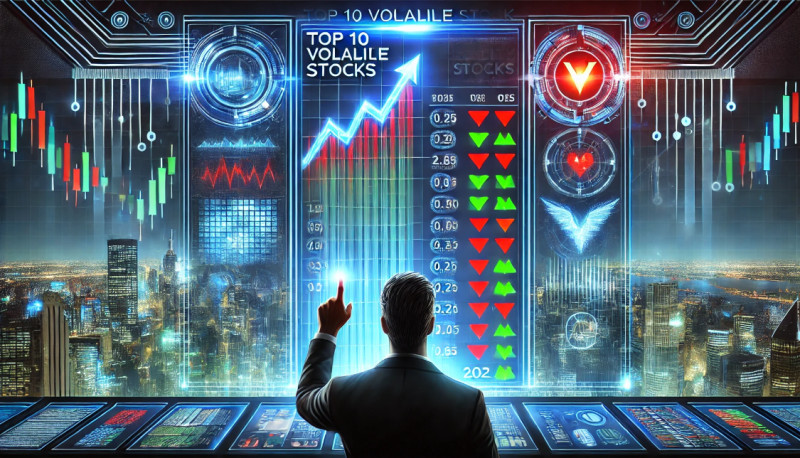
The high amplitude of price movement in the technology sector makes certain stocks an ideal environment for short-term momentum trading. Below is a list of ten of the most active representatives of the sector — each demonstrating strong volatility, high news flow, and potential for quick trading execution.
| Company | Profile | Risks |
| Palantir | Data analytics, government contracts, private sector solutions | Dependence on defense sector, volatile earnings reports |
| UiPath | Business process automation | Competition with tech giants, slowing demand |
| Tesla | EVs, autonomy, AI, energy | Regulatory pressure, unstable margins |
| Rivian | Electric vehicles, off-road focus | High production costs, unstable logistics |
| AMD | Chips for PCs, data centers, and gaming | Market cyclicality, price pressure |
| Nvidia | GPU leader, generative AI | Overheated valuation, reliance on AI hype |
| C3.ai | Enterprise AI, SaaS | Loss-making, overvaluation, sensitivity to expectations |
| SoundHound | Voice AI, speech recognition | Low liquidity, extreme news sensitivity |
| Super Micro Computer | Servers for HPC and AI infrastructure | Narrow segment, logistics risks |
| Coinbase | Largest US crypto platform | Dependence on crypto market, regulatory scrutiny |
This table of dynamic tech-sector stocks is not just a list — it’s a set of high-energy instruments with daily movement potential. They are likely among the best stocks to buy for active traders. Each position offers a chance to work with momentum — provided there’s a clear plan and risk management in place.
In the context of 2025, these represent real entry points into the technological rhythm of the future.
Beginner mistakes
The market does not forgive naivety. Here, every illusion has a price — often a high one. Especially costly are the impulses to “enter the market just to be in,” to guess instead of calculate, or to chase profit without a strategy. The main mistakes of beginners are not about what they don’t know — but about what they think they already know.
1. Overtrading — main trap
The desire to be constantly in a position, to keep pressing buttons and catching “just one more move,” destroys even well-thought-out ideas. The market moves on its own schedule, not yours. When someone opens trades on every pullback, every volume spike, every candle — that’s not a strategy, it’s chaos.
Solution: You’re not trading charts — you’re trading probabilities. Positions should be opened only when specific conditions are met: level, volume, volatility, confirmation.
Three well-defined entries per week are better than thirty random ones. The more actions without a plan — the higher the cost of error.
2. Ignoring risk and FOMO trap
A beginner sees a stock skyrocketing — and jumps in without assessing levels, volume, or stop points. Or worse — tries to “catch up” with a move that’s already over, buying at local highs. Wanting to be “in the trend” without understanding the reason is a straight road to losing capital. The promising stocks of 2025 won’t help you here.
FOMO (fear of missing out) disables critical thinking. It makes you chase fleeting profits when patience was needed. Successful traders don’t chase the market — they wait until the market gives them an entry.
Solution: No trade is opened without a defined risk level, goal, and trigger. A valid setup is when the entry is both logical and technical — not emotional. Every impulse is not an opportunity; it’s a question: are you trading your system, or are you being pulled by the current?
3. Blind faith in hype
Someone on YouTube claims “this company will do 10x,” another touts a “breakthrough AI startup,” someone on Reddit posts “to the moon” charts — and a beginner takes it as a signal. No analysis. No due diligence. No understanding of the business model.
The result: buying into an overheated idea at the peak of optimism and selling at a loss when the crowd leaves.
Lesson: Loud words ≠ high probability. Real opportunities don’t shout.
Solution: Every idea goes under the microscope. Analyze structure of movement, reaction to news, volume behavior, and earnings history. Real ideas are built on probability, not hype.
4. Neglecting risk management
Without loss limitation, even the best strategy becomes a losing one. Beginners enter the market thinking, “I’ll set the stop later,” “I’ll hold a bit longer, it might rebound,” “the loss is small — not a problem.” After five of these “not a problems,” the account is down by double digits.
Professionals have no supernatural skills — they have discipline. And discipline starts with controlling losses. Risk per trade is predefined. Stop levels are fixed. Exit rules are written down. That’s how short-term investments stay alive.
Solution: No trade without a clear risk rule. 1–2% of the account — maximum. Profit potential — at least twice that. Otherwise, no trade. Not out of fear, but out of efficiency.
Success in volatility trading doesn’t come from inspiration — it comes from structure. The winner isn’t the one who “found the idea first,” but the one who controls every action.
The path to profit begins with the ability not to lose.
To stop losing means:
- Don’t enter when there’s no reason.
- Don’t chase when everyone runs.
- Don’t believe until you’ve verified.
- Don’t risk until you’re protected.
The main resource is not capital — it’s mindset. Everything else follows from that.
Alternatives to volatile instruments
When the market moves fast, entering base assets directly isn’t always the best choice. Sometimes it’s more efficient to manage direction, timing, and risk more flexibly. Three alternative approaches enable that: derivatives, index instruments, and leveraged contracts. Each offers precision in working with market movement — but requires understanding of its mechanics.
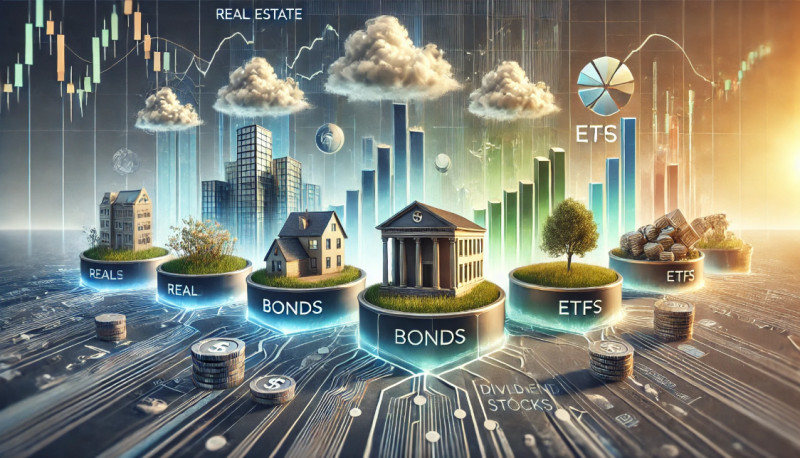
1. High-beta ETFs — movement without picking individual stocks
Sector ETFs focused on technology allow trading the overall industry trend rather than specific companies.
Examples: QQQ (Nasdaq-100), XLK (Technology Select Sector), SOXL (3x leveraged semiconductors).
Their volatility often exceeds that of individual stocks, especially with leveraged ETFs.
Advantages:
- Diversification within the sector;
- High liquidity and transparency;
- Simplified trend participation;
- Reduced exposure to single-company failures.
High-beta funds move aggressively in both directions, making them powerful tools for short-term trading — similar to volatile equities. Ideal for traders who focus on sector momentum rather than single-company news.
Risks: amplified two-way movement, limited control over internal fund composition, sensitivity to macroeconomic conditions.
2. CFDs and futures — precision work with momentum and volume
Contracts for Difference (CFDs) and futures allow leveraged positions — profiting from both rising and falling markets, with minimal latency and high liquidity. These instruments provide flexible entry and exit, especially on short timeframes.
CFDs are more common in Europe and retail platforms; futures are the professional standard.
In the tech sector, popular instruments include Nasdaq-100 (NQ), micro-futures (MNQ), and CFDs on Tesla, Nvidia, Meta, and others.
Advantages:
- High execution speed;
- 24/5 market access;
- Instant reaction to news;
- Ability to hedge other positions.
Disadvantages:
- High sensitivity to volatility;
- Strict risk management required;
- Leverage amplifies both profit and loss.
Such instruments don’t forgive emotion. They demand cold calculation, understanding of liquidity, and level/volume analysis — but they offer the highest precision in trading movement.
Three approaches — three levels of engagement:
- Options — for strategic thinkers.
- ETFs — for trend followers.
- CFDs and Futures — for real-time operators.
Each has its own logic, rhythm, and potential. True flexibility comes when tools are chosen for the task — not when the market dictates the style. You decide how to interact with it and choose the best stocks to buy accordingly.
That’s the essence of professionalism: not just seeing movement, but knowing how to monetize it.
Conclusion
High volatility isn’t an anomaly — it’s the new market normal. Movements are sharper, reactions faster, and the news impact is immediate. A single quarterly report can move a stock by double digits in minutes. This isn’t a threat — it’s an environment where speed of thought and systematic structure create competitive advantage.
2025 marks the year when the rules of the game are fully rewritten. The classical “buy and hold” model no longer delivers expected returns without flexibility. Micro-cycles within trends now matter more than long-term horizons. Potential arises not from time, but from precision.
The technology sector remains the main driver, but not all players are equal. The market rewards adaptability, innovation, and implementation speed. Companies that can scale rapidly, operate at the intersection of AI, computing, data, and interaction are becoming catalysts for short-term opportunities. Their behavior may be volatile — but that’s where the strength lies.
Working with volatility requires a different mindset. Success belongs not to those who “know more,” but to those who are structured. The market isn’t a theory exam — it’s a discipline test.
The plan matters more than the prediction.
Emotions are the main enemy. They make you enter late, exit early, hesitate when you should act, and rush when you should wait. Systematic structure is the shield. An algorithm filters out noise. Entries are signal-based. Exits — by confirmation. No improvisation. Only then can one count on the promising stocks of 2025.
Discipline is not rigidity — it’s freedom from excess. It’s confidence in every action, clarity of acceptable risk, and refusal to chase the market. The ability to wait. The ability not to click the button when there’s no setup. It may look boring — but it’s effective.
Without a strategy, even the best ideas turn into chaos. There’s always direction — but the question is not where the market is going, it’s how prepared you are. Uptrend, downtrend, or sideways — each requires its own plan. There’s no room for “maybe.” Only calculation.
True strength is not in prediction — but in proper reaction. Strong market participants act with structure. They know where they enter, where they exit, and how much they’re willing to lose. Everything else is noise.
Ahead lie years of technological turbulence. New trends will emerge faster — AI, robotics, bio-digital interfaces, neural networks in business and daily life — all generating endless triggers for dynamic movement.
But there will only be two types of participants:
- those who react emotionally,
- and those who act by system.
If you want to be the second — build algorithms, manage risk, think in probabilities, not predictions. Every day the market offers opportunity — but opportunity turns into result only when backed by structure and short-term investment discipline.
Results are not a function of luck — but of repeatability. Repeatability builds scale. Scale gives freedom. First comes structure, then speed. First comes protection, then growth. That’s the only way.


 Back to articles